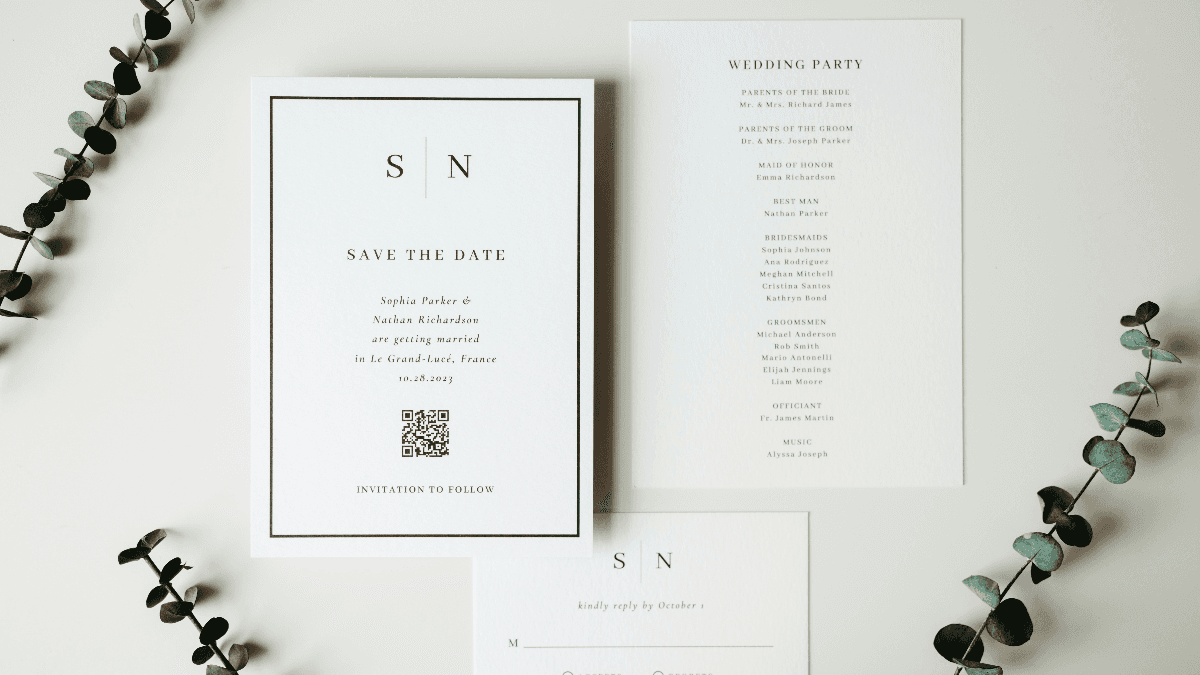
Planning a wedding is a beautiful journey filled with decisions both big and small. One question that catches many couples off guard? When exactly should we tell our guests about our wedding?
It's more nuanced than you'd think. A save-the-date isn't just an early invitation, it's a courtesy that gives your guests time to plan, especially if they need to book flights, arrange childcare, or request time off. And then there's the formal invitation, which serves a different purpose: confirming details, capturing RSVPs, and setting expectations.
Get the timing wrong, and you risk guest confusion ("Wait, did I already RSVP?"), missed responses, or worse, guests who feel left out of the loop. Get it right, and your guests know exactly what to expect and when.
Let's break down the ideal timeline so you can send invitations with confidence.
Why Timing Matters More Than You Think
Here's what we know from planning countless weddings: guests need time to adjust their calendars, especially for destination weddings or events requiring travel. But they also don't need an invitation sitting in their inbox for nine months gathering digital dust.
A save-the-date signals, "Hey, we'd love to celebrate with you, something's coming." The formal invitation then delivers the details: exact time, venue, RSVP deadline, and any special instructions.
The sweet spot? Save-the-dates go out 2–4 months before the wedding, and formal invitations follow 4–6 weeks later. This gives guests enough notice to plan without overwhelming them, and it keeps the momentum going as your wedding approaches.
Timeline by Season: Your Complete Guide
The timing can shift slightly depending on your wedding date, travel requirements, and guest geography. Here are practical timelines for different seasons:
Winter Wedding (January 2027)
Save-the-Date Send by early September 2026: digital or printed cards giving 4-month notice
Formal Invitation Send by mid-November 2026: detailed invitation with venue, time, dress code, RSVP link
RSVP Deadline Set for early December 2026: gives caterers 3–4 weeks to finalise numbers
Final Headcount Confirm by mid-December 2026: lock in seating, catering, final logistics
Why this works: September notices catch guests before they book holiday travel. November invitations arrive with enough time to arrange accommodations during peak winter booking season, but close enough to your wedding date that details feel real and pressing.
Spring Wedding (April 2027)
Save-the-Date Send by mid-December 2026: early heads-up during the holiday season
Formal Invitation Send by late February 2027: two months before the wedding
RSVP Deadline Set for mid-March 2027: typically 3–4 weeks before the event
Final Headcount Confirm by late March 2027: finalise with vendors
Why this works: A December save-the-date catches people while they're mentally planning their year. By February, spring travel is top-of-mind for your guests, so the formal invitation lands at the perfect moment. March deadlines give your vendors enough time to prepare without scrambling.
Summer Wedding (July 2027)
Save-the-Date Send by early March 2027: four-month advance notice
Formal Invitation Send by early May 2027: 8–9 weeks before the wedding
RSVP Deadline Set for end of May 2027: about 6 weeks before the event
Final Headcount Confirm by early June 2027: lock in all logistics
Why this works: Summer is peak travel season, so early March saves give guests time to book flights and plan vacations around your wedding. May invitations are perfectly timed, close enough to feel real, far enough away that guests have space to coordinate with others who'll attend.
Fall Wedding (October 2027)
Save-the-Date Send by late June 2027: four-month advance notice
Formal Invitation Send by mid-August 2027: 6–7 weeks before the wedding
RSVP Deadline Set for late September 2027: 3–4 weeks before the wedding
Final HeadcountConfirm by early October 202: just before the final push
Why this works: Summer is when people plan fall travel and events. A late-June save-the-date catches that planning window. August invitations remind guests to finalize their plans before the school year kicks back in and schedules tighten.
Key Principles: Make It Easy on Your Guests
Beyond the dates themselves, here are a few things to keep in mind so your timeline works for your guests, not against them:
1. Be Clear About What Each Piece Is
When you send your save-the-date, explicitly say "Formal invitation to follow in [month]." This prevents the "Do I need to respond now?" confusion. Same with your formal invitation. make your RSVP deadline crystal clear.
2. Consider Guest Geography
If you have guests traveling internationally, adjust earlier. Destination weddings with significant travel? Add another 2–4 weeks to your save-the-date window. Intimate local celebration? You can be a bit more relaxed.
3. Account for Your Guest's Calendar
Think about your audience. If many guests are in school or academia, avoid send dates during chaotic times like September or exam season. If your guests are mostly professionals, mid-week send dates (Tuesday–Thursday) tend to perform better.
4. Build in Buffer Time
Your RSVP deadline should ideally land at least 3–4 weeks before your wedding. This gives your caterer, venue, and seating chart time to finalize. If guests are slow to respond, you'll have time for a gentle follow-up.
5. Use Digital Tools to Track
A digital invitation platform (like Dear My Love) means you can see RSVPs in real time, send reminders, and track who hasn't responded yet. This removes the stress from managing your guest list manually.
What to Include in Each Piece
Save-the-Date Should Include:
Your names
Wedding date (and year!)
General location (city/region is fine; exact venue not required)
"Formal invitation to follow in [specific month]"
Optional: your website or a way guests can mark their calendar
Formal Invitation Should Include:
Date, time, and exact venue address
Dress code
RSVP deadline and link/method to respond
Accommodations information (hotel blocks, parking, etc.)
Dietary restrictions collection if applicable
Your contact info for questions
Any other logistics (ceremony start time, reception location if different, etc.)
The Golden Rule: Don't Ghost Your Guests
The worst thing you can do is send a save-the-date and then go silent for months. Use that time between your save-the-date and formal invitation strategically:
6–8 weeks before: Send a "We can't wait to celebrate with you!" email with your wedding website
4–5 weeks before: Formal invitation lands
2 weeks before: One gentle RSVP reminder
1 week before: Final headcount confirmation with those who've already responded
This keeps the excitement alive and gently nudges lagging guests without being pushy.
Ready to send beautiful, trackable invitations? Dear My Love makes it simple to time your save-the-dates and formal invitations perfectly, track RSVPs in real time, and keep your guests engaged every step of the way.